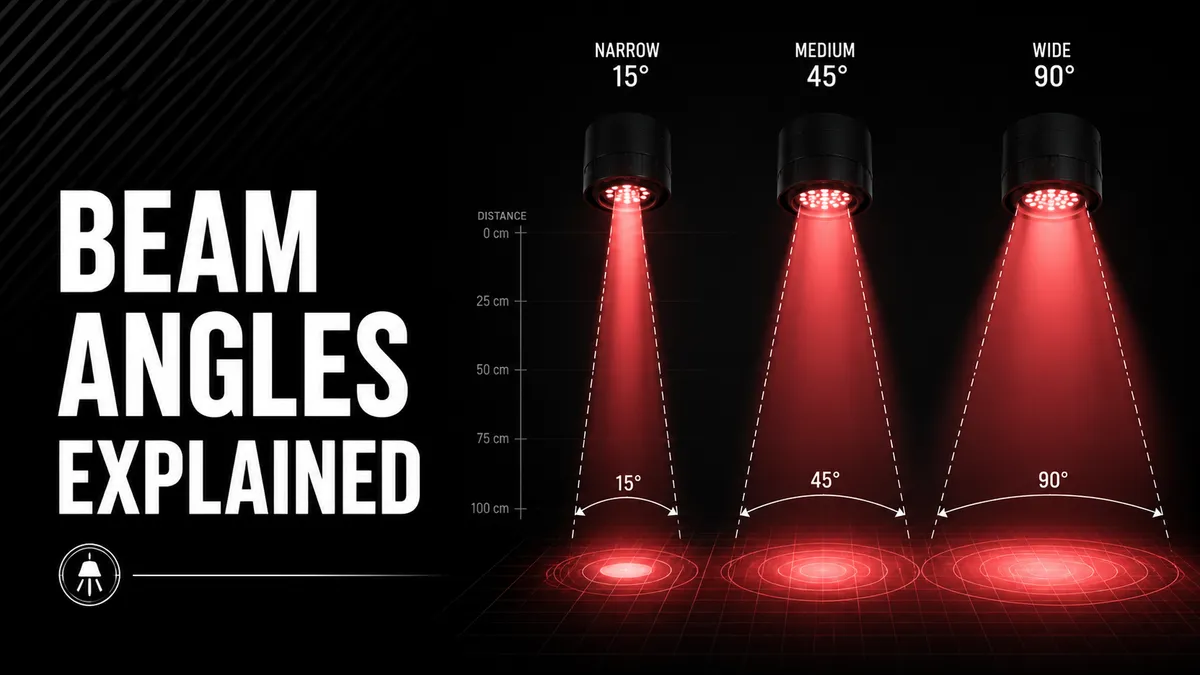
Beam Angles Explained
Why the Lens in Front of the LED May Be More Important Than the LED Itself
By Dr. Kory Pohlman
One of the most overlooked specifications in professional light therapy isn't the wavelength.
It isn't irradiance.
It isn't even the LED itself.
It's the tiny optical lens sitting in front of every LED.
That little piece of plastic or glass may have more influence on how your treatment feels than almost any other component in the system.
Yet most manufacturers barely mention it.
Let's change that.
What Is a Beam Angle?
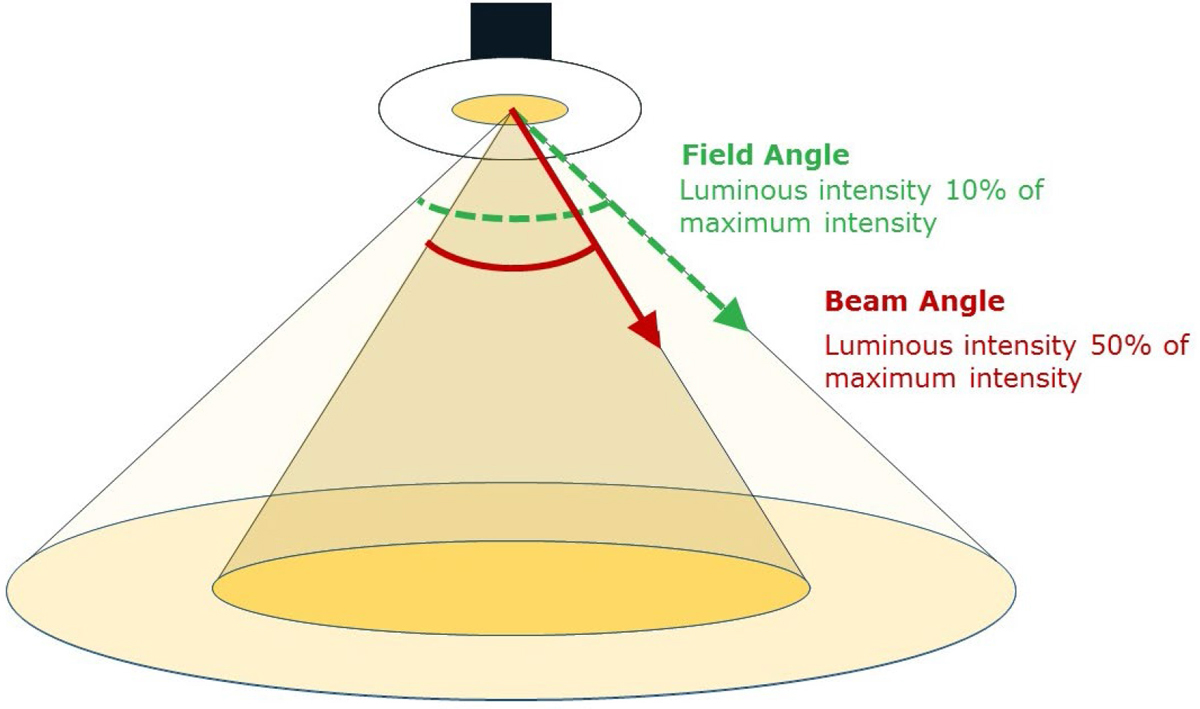
Imagine grabbing a flashlight.
Now imagine twisting the front of the flashlight until the beam becomes very narrow.
The light travels a long distance.
It's bright.
Focused.
Concentrated.
Now twist the flashlight the other direction.
The beam spreads out.
The light covers a much larger area.
But it's less concentrated.
The bulb never changed.
Only the optics did.
That's exactly what a beam angle does.
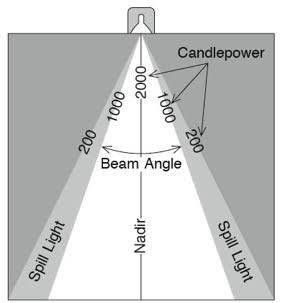
It determines how photons leave the device and spread through space.
A Garden Hose Explains It Perfectly

Imagine watering your lawn.
Put your thumb over the end of the hose.
The stream shoots much farther.
It's concentrated.
Powerful.
Remove your thumb.
Now the water spreads over a much wider area.
It doesn't travel as far.
But it covers much more ground.
Neither setting is "better."
They're simply designed for different jobs.
Beam angles work exactly the same way.
A narrower beam concentrates light.
A wider beam distributes light across a larger treatment area.
Good engineering isn't choosing the narrowest beam.
It's choosing the right beam for the intended treatment.
The Campfire Analogy

Imagine standing around a campfire.
Stand too close...
The heat is intense.
Step back several feet...
The warmth spreads comfortably across your body.
Walk another twenty feet away...
You barely feel anything.
Now imagine the fire could somehow focus all of its heat into a narrow column.
You'd feel tremendous warmth—but only if you were standing directly inside that column.
Spread that same heat over a much larger area, and more people can enjoy it, but the intensity at any one spot changes.
That's exactly what beam angles do with light.
They determine how concentrated—or how spread out—the photons are when they reach the patient.
Narrow Doesn't Mean Better
One of the biggest myths in the industry is that narrower beam angles are automatically superior.
They're not.
A tighter beam may help maintain irradiance over greater distances.
That can be very useful in certain applications.
But there are tradeoffs.
A narrow beam covers less area.
It requires more overlap between LEDs.
It creates different engineering challenges.
Like nearly everything in engineering...
Every advantage comes with a compromise.
Wide Doesn't Mean Better Either
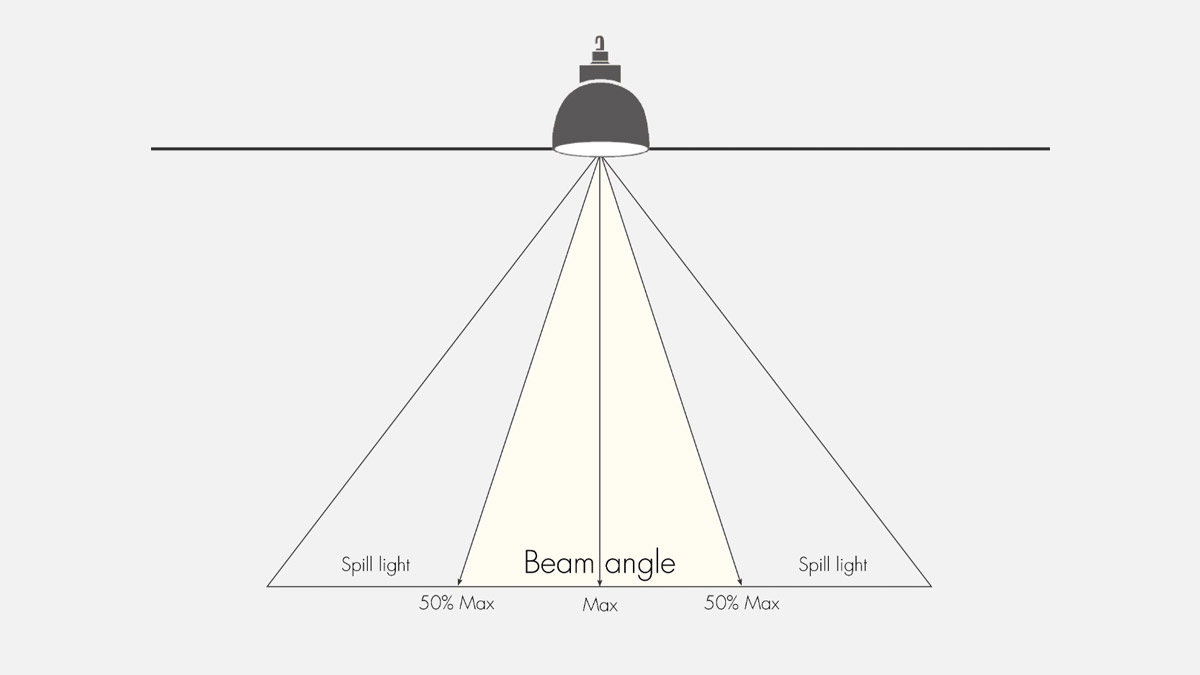
On the other hand...
A wider beam creates broader coverage.
More overlap.
A smoother treatment field.
A more immersive experience.
But it also spreads photons across a larger area.
Again...
Neither is universally better.
They're simply solving different engineering problems.
That's why I become skeptical whenever someone says,
"Our beam angle is better."
Without context...
That statement means almost nothing
Thousands of Flashlights
Here's an analogy I often use.
Imagine lighting a football field.
You could use:
One giant spotlight.
Or...
One thousand smaller lights carefully aimed so their beams overlap.
Which creates the better lighting?
It depends on what you're trying to accomplish.
Professional stadiums don't rely on one enormous spotlight.
They use hundreds of carefully engineered fixtures.
Each beam overlaps the next.
The result is smooth.
Uniform.
Consistent.
That's exactly how professional light therapy systems work.
Patients aren't treated by one LED.
They're treated by thousands of overlapping cones of light.
That's why beam angle is so important.
The Ice Cream Scoop Analogy

Imagine you're serving mashed potatoes.
You have two scoops.
One is tiny and deep.
The other is wide and shallow.
Both hold the same amount.
But they spread that amount differently.
Photons behave similarly.
The total energy may be comparable.
How that energy is distributed changes dramatically depending on the optics.
Beam angle isn't just about power.
It's about distribution.
Why Kore Uses Different Beam Angles
One question we hear often is,
"Why don't all your devices use the same optics?"
Because they shouldn't.
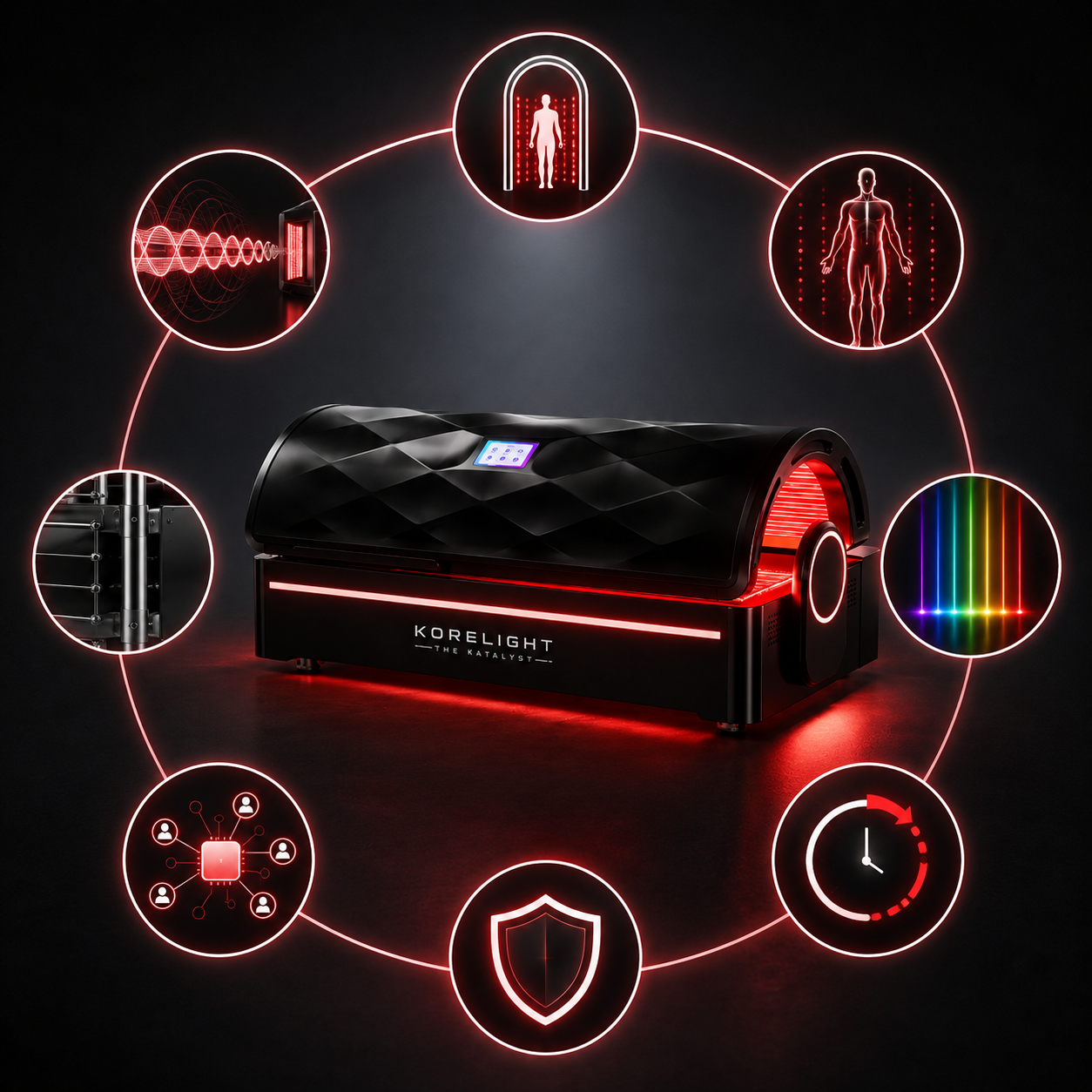
Every Kore system was designed around a different clinical objective.
For example:
Our KoreNRG™ uses a tighter optical design because it's intended for localized treatments where concentrating light into a smaller treatment area makes sense.
Our KoreLUX™ uses larger, high-output LEDs paired with carefully selected optics to help create a premium full-body treatment experience while maintaining excellent optical performance across the treatment field.
Our KoreELITE™ takes a different approach entirely. Its exceptionally dense LED array and curved canopy geometry work together to create a remarkably uniform treatment environment. The arc of the canopy helps keep more of the body at a consistent working distance from the LEDs, while the overlapping light cones contribute to even coverage from head to toe.
Different engineering.
Different objectives.
Different solutions.
That's intentional.
Beam Angle Changes More Than Coverage
Changing the optics affects almost everything.
Treatment distance
Light overlap
Irradiance at the patient
Uniformity
Patient comfort
Treatment experience
Dose distribution
That's why we never select optics in isolation.
They're chosen as part of the entire engineering system.
The LEDs.
The cabinet geometry.
The spacing.
The treatment distance.
The wavelengths.
Everything works together.
Engineering Is About Tradeoffs
One thing I've learned after years of designing wellness technology is this:
There are very few perfect answers.
There are only intelligent tradeoffs.
Every beam angle solves one problem while creating another.
The art of engineering is balancing those tradeoffs to produce the best possible clinical outcome.
That's why you'll never hear us say,
"Thirty degrees is always better than sixty degrees."
Or,
"Narrow beams always outperform wide beams."
Those statements ignore the complexity of real engineering.
Final Thoughts
The next time someone tells you their device has a particular beam angle, don't stop there.
Ask why.
Why was that angle selected?
What clinical objective was it designed to achieve?
How does it interact with the LED?
How does it affect treatment distance?
How does it influence dose?
Because beam angle isn't just another specification.
It's one of the invisible engineering decisions that determines how a light therapy system performs in the real world.
And in our opinion...
That's a far more interesting conversation than simply comparing numbers.