
Inverse square law and myths
The Inverse Square Law: One of the Most Misunderstood Concepts in Light Therapy
Spend enough time researching red light therapy, and you'll eventually hear someone say:
"The light has to touch your skin or it won't work."
Or...
"If you're more than a few inches away, the treatment is useless."
While these statements sound scientific, they often oversimplify—or completely misunderstand—one of physics' most well-known principles: The Inverse Square Law.
At Kore, we believe providers deserve to understand what this law actually means, how it applies to photobiomodulation, and why simply telling patients to "get closer" is not a substitute for proper engineering.
Because the goal isn't to have the light close to the skin.
The goal is to deliver the correct irradiance and therapeutic dose at the skin.
Those are two very different things.
What Is the Inverse Square Law?
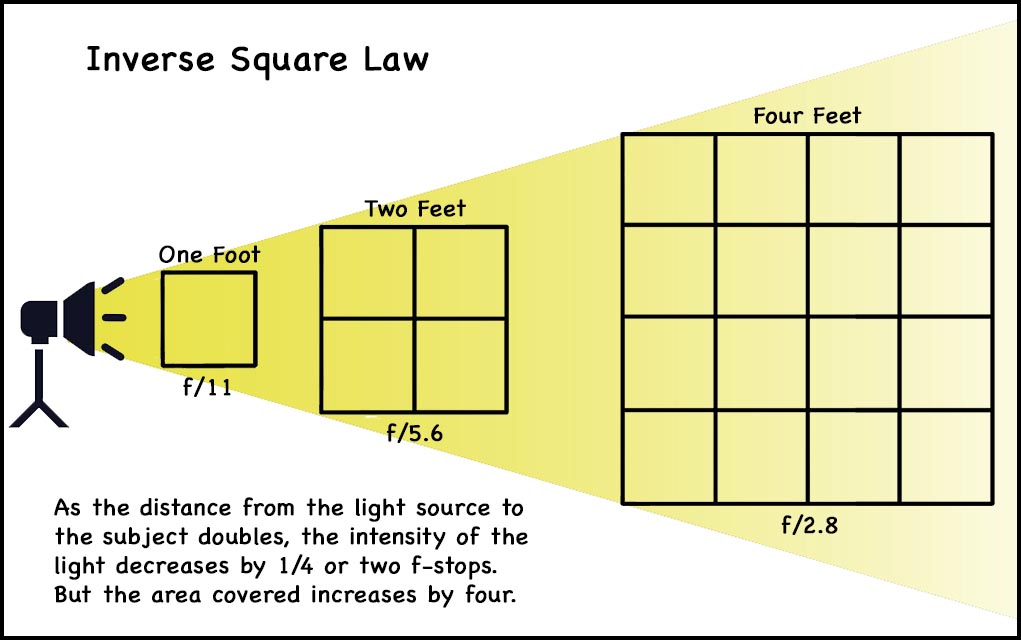
The Inverse Square Law states that light intensity decreases as the distance from the source increases.
Mathematically, it follows this relationship:
Intensity ∝ 1 / Distance²
That means if you double the distance from a single point source, the light intensity becomes roughly one-quarter as strong.
Triple the distance...
Roughly one-ninth.
This is basic physics.
No reputable company argues otherwise.
But here's where many marketing conversations become misleading.
Light Therapy Panels Aren't Single Light Bulbs
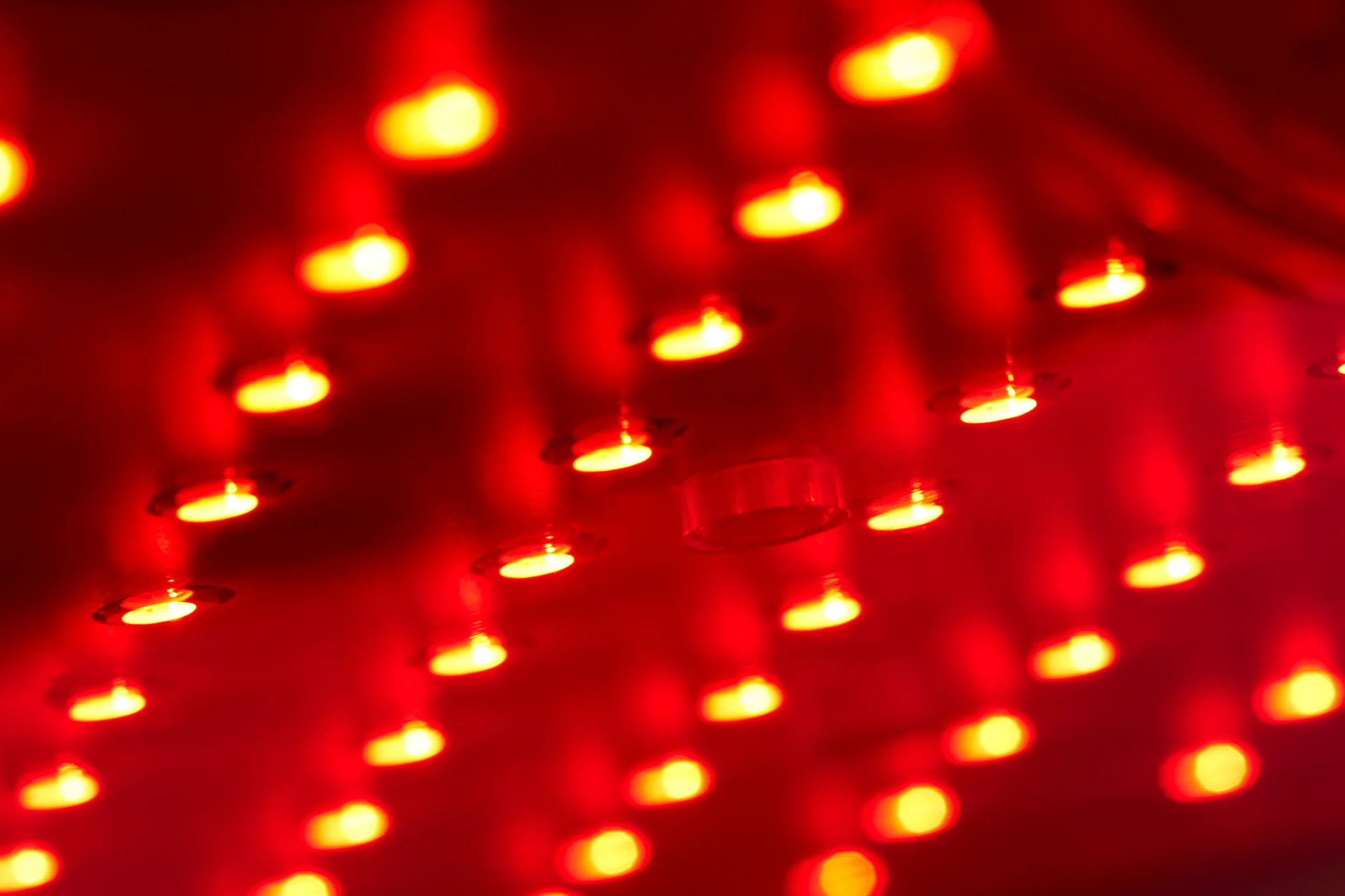
The classic Inverse Square Law describes a single point source of light radiating equally in every direction—like a bare light bulb floating in space.
That is not how modern therapeutic light systems are designed.
Large photobiomodulation devices contain hundreds—or even thousands—of LEDs.
Each LED overlaps with neighboring LEDs.
Optical lenses shape the beam.
Beam angles are engineered.
Arrays are spaced intentionally.
Light fields merge together.
Instead of one tiny source, you're standing in front of an engineered optical system.
That changes everything.
The Inverse Square Law still exists—but its real-world effects are far more nuanced than marketing slogans suggest.
The Question Isn't Distance

The question is:
How much usable light reaches the tissue?
This is where irradiance becomes far more important.
Irradiance measures the amount of optical power reaching a given area of skin.
That's what your cells actually experience.
Not how close the LEDs are.
Not how impressive the LED count sounds.
Not how many watts appear on a specification sheet.
If a properly engineered device still delivers therapeutic irradiance six inches away...
It is still delivering therapeutic light.
If another device only produces therapeutic irradiance when touching the body...
That isn't because touching the body is scientifically required.
It's because the device doesn't produce enough usable energy at greater distances.
Those are two very different situations.
Distance Doesn't Determine Results

Dose does.
This may be the single most important concept in photobiomodulation.
Cells respond to the amount of energy they receive—not the distance from the LEDs.
Think about standing in the sun.
You aren't touching the sun.
Yet tremendous amounts of light energy reach your skin.
Distance alone isn't the deciding factor.
Energy delivered is.
The exact same principle applies in photobiomodulation.
The Goal Is Therapeutic Dose

Every successful treatment comes down to one objective:
Deliver the proper energy dose to the target tissue.
That dose depends on multiple variables including:
Irradiance
Treatment time
Distance
Beam angle
Optical design
Wavelength
Tissue depth
Pulse frequency
Distance is only one piece of a much larger equation.
Focusing on distance alone ignores nearly everything that actually determines treatment success.
Engineering Changes Everything

Imagine two devices.
Device A loses nearly all of its usable irradiance after only a few inches.
Device B is engineered with premium optics, efficient LEDs, optimized beam angles, intelligent spacing, and higher optical performance.
At eight inches away, Device B still delivers therapeutic irradiance.
Which device would you rather own?
The answer isn't:
"The one that touches the skin."
The answer is:
"The one engineered to maintain effective energy delivery."
That's exactly what advanced optical engineering is designed to accomplish.
Why Premium Components Matter
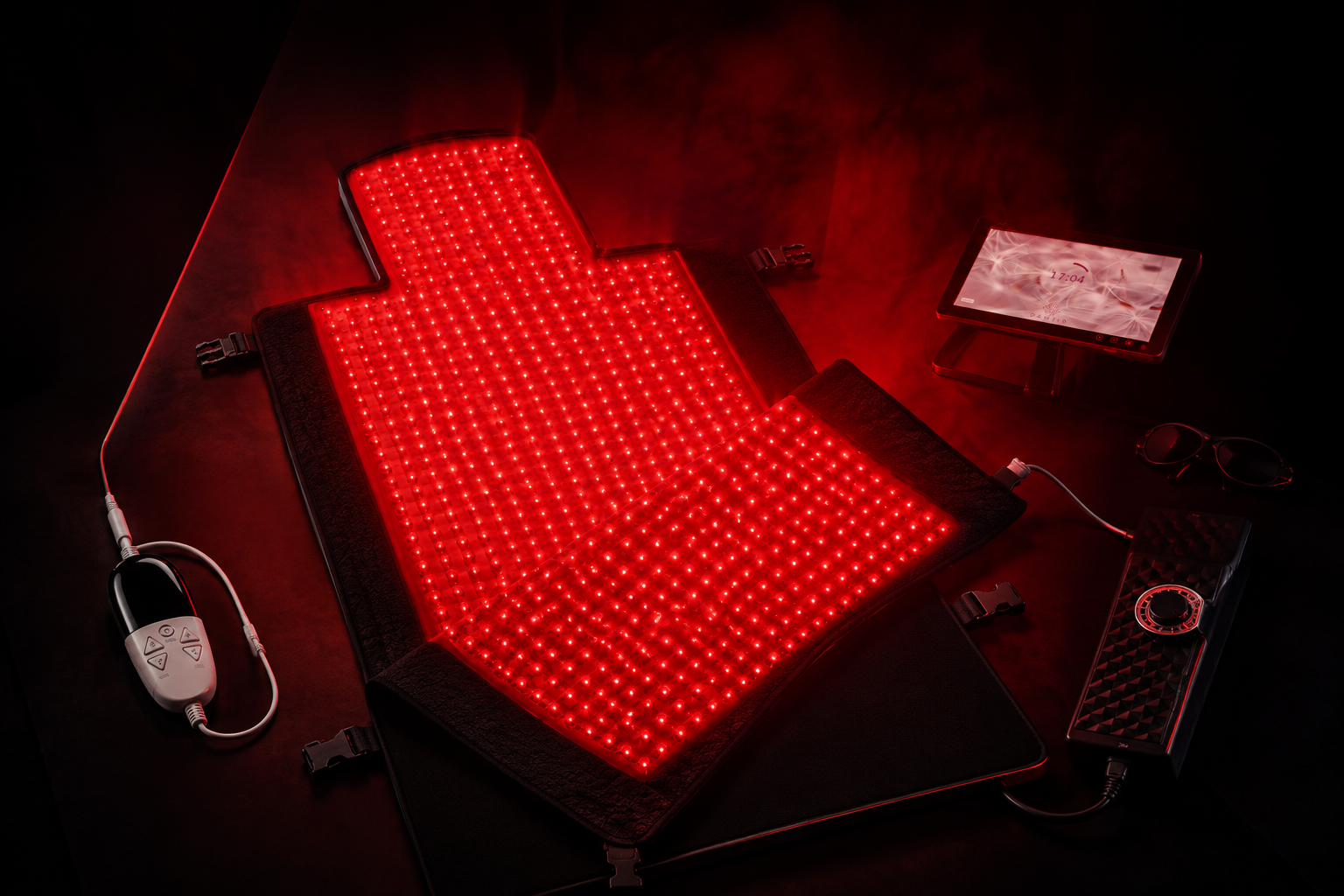
Maintaining therapeutic irradiance at practical treatment distances isn't accidental.
It requires careful engineering.
At Kore, we evaluate:
LED efficiency
Lens geometry
Beam angle
Optical overlap
Driver stability
Thermal management
Power consistency
Array spacing
Wavelength selection
Every one of these factors affects how much usable light ultimately reaches the patient.
This is why two devices with similar-looking specifications can perform very differently.
Engineering matters.
Bigger Isn't Always Better—But Smarter Usually Is
Some companies advertise enormous LED counts.
Others advertise maximum wattage.
Others insist treatments only work with the device touching the skin.
None of those claims automatically predict better clinical outcomes.
What matters is whether the system consistently delivers the proper therapeutic dose.
That's where intelligent engineering outperforms marketing.
Don't Confuse Weak Devices with Scientific Principles
Sometimes you'll hear statements like:
"Light therapy only works if it's touching the skin."
More accurately, that often means:
"Our device doesn't produce enough usable irradiance unless it's extremely close."
Those aren't the same statement.
Physics didn't change.
The engineering simply reached its limitations.
A well-designed therapeutic system should provide providers with flexibility—not force them into one narrow treatment position.
The Real Question Every Provider Should Ask
Instead of asking:
"How close does this device have to be?"
Ask:
What irradiance reaches the skin?
What dose reaches the tissue?
Is that dose clinically appropriate?
Has the system been engineered around evidence-based treatment goals?
Can it consistently deliver those results across real-world treatment distances?
Those are the questions that matter.
The Kore Difference
At Kore, we don't design products around marketing myths.
We design them around science.
Our engineering team focuses on delivering the right irradiance, the right wavelengths, the right dose, and the right protocols—not simply the shortest treatment distance.
Because patients don't respond to how close an LED sits to their skin.
They respond to the energy their cells receive.
That's why we believe smarter engineering will always outperform clever marketing.
Distance matters.
But dose matters even more.
And that's the difference between understanding physics... and simply using it as a sales pitch.