
Why We Added 1060nm
The Next Evolution in Professional Light Therapy
By Dr. Kory Pohlman
When we first began designing professional light therapy systems, we weren't interested in building just another red light device.
We wanted to build a platform.
A platform that could evolve with the science.
A platform that gave clinicians more flexibility.
And a platform designed not just for today's research—but for where photobiomodulation is heading.
That philosophy is one of the reasons we chose to include 1060nm across our professional systems.
Not because it was the newest wavelength.
Not because it looked good on a brochure.
But because we believe it complements the wavelengths that have already become foundational in photobiomodulation.
Every Wavelength Tells a Different Story

One of the biggest misconceptions in light therapy is the belief that every wavelength does essentially the same thing.
They don't.
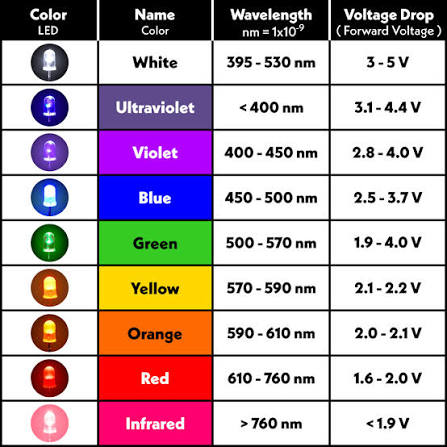
Each wavelength interacts with tissue differently.
Some are absorbed more superficially.
Others penetrate deeper.
Some have become well studied for skin applications.
Others are commonly explored for muscle, joints, recovery, and broader wellness applications.
Think of wavelengths like golf clubs.
You don't hit every shot with a driver.
Nor do you use only a putter.
Each club exists for a specific purpose.
Professional light therapy should be designed the same way.
Our goal has never been to find one "perfect" wavelength.
Our goal has been to build systems that allow clinicians to address a wide range of applications with confidence.
Why We Chose to Include 1060nm
As we continued reviewing the scientific literature and monitoring the evolution of photobiomodulation, one thing became increasingly clear.
Research wasn't standing still.
New wavelengths were continuing to emerge in both laboratory and clinical discussions.
Rather than designing systems that were locked into yesterday's technology, we wanted to create platforms capable of incorporating advances that we believed had the potential to expand clinical versatility.
That led us to 1060nm.
We didn't view it as a replacement for the proven red and near-infrared wavelengths that have formed the backbone of photobiomodulation research.
We viewed it as an addition.
Another tool.
Another option.
Another way to broaden what our systems could offer.
Engineering Beyond the "Standard" Wavelengths

Many manufacturers stop at the wavelengths that have traditionally dominated the market.
That's understandable.
Adding additional wavelengths increases engineering complexity.
Every wavelength introduces new design considerations.
Different semiconductor materials.
Different efficiencies.
Different thermal characteristics.
Different optical behavior.
Different power requirements.
Integrating another wavelength isn't as simple as swapping out an LED.
The entire optical and electrical system must still work together.
That's why every new wavelength must be evaluated as part of the complete platform—not as an isolated feature.
More Wavelengths Don't Automatically Make a Better Device
Let's be clear about something.
Simply adding more wavelengths doesn't automatically improve a light therapy system.
In fact, adding wavelengths without a clear engineering purpose can actually complicate system design.
At Kore, every wavelength has to earn its place.
If it doesn't complement the overall treatment philosophy...
It doesn't get added.
Our decision to include 1060nm wasn't driven by marketing.
It was driven by our commitment to continually improving the clinical capabilities of our systems while staying grounded in sound engineering principles.
Innovation Doesn't Stop

One thing I've learned after years of designing wellness technology is this:
The best products are never truly finished.
Science evolves.
Technology improves.
Manufacturing advances.
Our responsibility as engineers is to keep learning.
That's why we continually evaluate new components, new optical designs, and emerging research.
Not because we're chasing trends.
Because we're committed to building better clinical tools.
1060nm is one example of that philosophy.
And it certainly won't be the last.
Why We Believe in Building Platforms

Many companies build products.
We try to build platforms.
Platforms are designed to evolve.
To adapt.
To improve.
As our understanding of photobiomodulation continues to grow, we want our systems to reflect that progress.
Adding 1060nm wasn't about saying, "We've arrived."
It was about acknowledging that innovation never stops.
Clinical Outcomes Remain the Priority
Every engineering decision eventually comes back to one question:
Will this help clinicians deliver better patient care?
That's the lens through which we evaluate every wavelength, every optical system, every protocol, and every design decision.
Not because it's the easiest path.
Because it's the right one.
Patients don't benefit from marketing trends.
They benefit from thoughtfully engineered technology built around clinical outcomes.
That's the standard we hold ourselves to every day.
Final Thoughts
Photobiomodulation has come a long way over the past several decades, and I believe we're still in the early chapters of its story.
The future won't belong to the companies that refuse to evolve.
It will belong to those willing to study the science, challenge assumptions, and thoughtfully integrate new technologies when they add real value.
That's why we added 1060nm.
Not because one wavelength changes everything.
But because we believe the best clinical systems are built by combining proven science, thoughtful engineering, and a commitment to continual innovation.